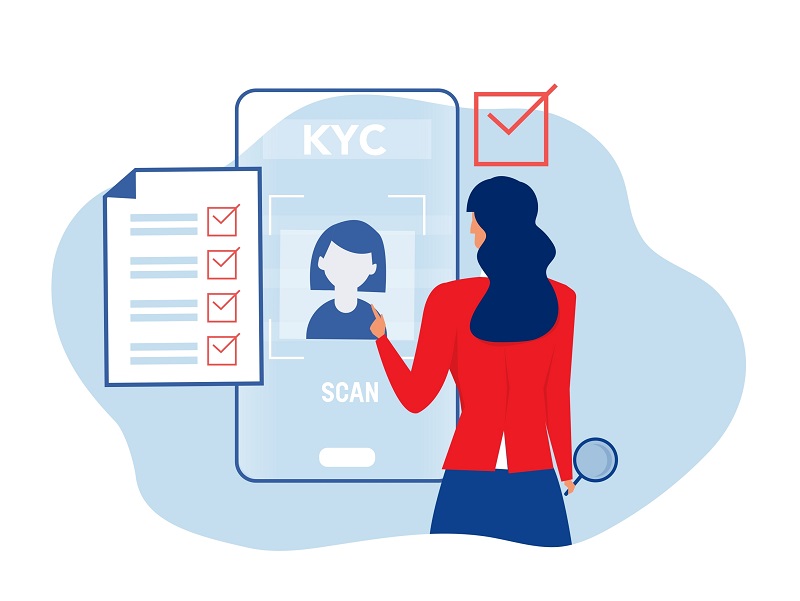
Update Your KYC Now And
Maintain Your Protection
Your financial protection is very important to us. In August 2022, the regulator of the insurance industry (IRDAI) had revised the AML (Anti-Money Laundering) Guidelines. As per these guidelines, Tata AIA is required to validate their current customer KYC records and ensure that they are updated in accordance with the latest list of valid and acceptable documents.


Accepted Documents for KYC (ID Proofs and Address Proofs)
| The following documents can be accepted as KYC documents: | |
Valid Address Proof |
Valid ID Proof |
|
|
• PAN is a mandatory document required for continuity of policy servicing.
• In case of documents that have an expiry date e.g., Passport or Driving License we request you to get the documents updated with us to ensure seamless policy servicing
• It is advisable to do a periodic validation of the existing KYC records to ensure the correctness and validity of the KYC documents
How Can Tata AIA Life Insurance Customers Update their KYC Details?
If you are a Tata AIA customer, update your KYC details in 4 easy steps:
-
01

Log into your My DigiAccount
-
02

Go to the “Update Address/PAN” option
-
03

Upload your latest documents
-
04

Click on “Submit”.


-
What is KYC?
KYC or "Know Your Customer" refers to the process of verifying the identity and address of customers opening accounts with banks, financial institutions, and other entities. In India, KYC guidelines are regulated by the Reserve Bank of India (RBI) and enforced by banks and other financial institutions. The main objective of KYC in India is to prevent identity theft, fraud, and money laundering.
To establish their identity and address, customers must provide official documents such as an Aadhaar card, passport, voter ID card, PAN card, driving license, or NREGA job card. These documents are verified by banks or financial institutions before opening an account or issuing a credit or debit card. KYC has become mandatory for buying life insurance or any other type of insurance policy, opening a bank account, investing in mutual funds, and even using digital payment services in India.
-
![]()
What are the Two Types of KYC?
In India, there are two types of KYC (Know Your Customer) processes:
-
Aadhaar-Based KYC
This type of KYC process is based on the Aadhaar card, a unique 12-digit identification number issued by the Unique Identification Authority of India (UIDAI). Aadhaar-based KYC involves linking the Aadhaar card with a bank account, mutual fund account, or any other financial account. This type of KYC is done online and is quick and convenient.
To complete the Aadhaar-based KYC process, the customer must provide their Aadhaar card number and biometric information (fingerprint and iris scan) for verification.
-
Non-Aadhaar-Based KYC
This type of KYC process involves verifying the identity and address of the customer through other documents such as a passport, voter ID card, PAN card, or driving license. The customer must provide the required documents and a photograph to complete the KYC process.
Non-Aadhaar-based KYC can be done online or offline, depending on the service provider. This process may take longer than Aadhaar-based KYC as the documents need to be verified manually.
-

What are the Benefits of Keeping KYC Updated?
Keeping your KYC updated offers the following benefits to you as well as businesses that require your information:
-

Enhanced Security
Updating KYC details can help protect against identity theft, fraud, and other financial crimes. Financial institutions can better identify and prevent unauthorized access to accounts by keeping personal information up-to-date.
-

Easy Access to Financial Services
Updated KYC details can help ensure a seamless customer experience when using financial services. It can reduce delays in processing transactions and enable customers to access financial services quickly.
-

Compliance with Regulatory Requirements
Regulators require financial institutions to maintain accurate and up-to-date KYC information. By keeping KYC updated, institutions can comply with these requirements, avoid penalties, and maintain a positive reputation.
-

Better Customer Service
Financial institutions can provide better customer service by keeping KYC details updated. It can reduce the need for customers to repeatedly provide the same information and enable institutions to personalize their services based on the customer's needs and preferences.

.svg "Image of Never Pay In Cash to Unknown Person to Secure By Insurance Frauds")
.svg "Image of Don't Share the OTP, DOB, or Password to Insurance Frauds Person")
.svg "Image of Do Not Sharing the Documents To Insurance Frauds Person")
Frequently Asked Questions on KYC
-
What is KYC full form?
The full form of KYC is Know Your Customer.
-
What is KYC in insurance?
In insurance, KYC involves gathering and verifying personal information, such as name, address, date of birth, and government-issued identification documents.
This process helps one comply with regulatory requirements, prevents fraud and protects the insurance company and its customers. By verifying the customer's identity and other relevant information, the insurance company can ensure that the policy is issued to the right person and that the policy terms are appropriate for the customer's needs.
-
Is KYC mandatory for insurance?
Yes, KYC is mandatory for purchasing a life insurance policy, and the insurance companies are required to adhere to the guidelines set by the Insurance Regulatory and Development Authority of India (IRDAI) for the KYC process.
-
Which documents are necessary for insurance KYC?
The following proofs of address and proofs of ID can be accepted for the KYC process:
- PAN Card
- Passport
- Voters ID Card
- Driving License
- Job Card issued by NREGA duly signed by an officer of the State Government
- Masked Aadhar Card
- Letter issued by UIDAI
- National Population Register
-
Why is KYC required?
KYC, or Know Your Customer, is needed by financial institutions, banks, and insurance companies to identify and verify the identity of their clients. This can help them prevent financial crimes and other illegal activities while maintaining an updated customer record.
-
What are two important benefits of KYC?
These are the two important benefits of KYC:
- Lowering Risks - KYC helps financial institutions and businesses identify and verify their customers, which reduces the risk of identity theft, fraud, money laundering, and other financial crimes.
- Regulatory Compliance - By implementing KYC processes, financial institutions can ensure compliance with regulations and laws, which helps to prevent penalties and other legal consequences.
-
Disclaimer
- Insurance cover is available under the product.
- The products are underwritten by Tata AIA Life Insurance Company Ltd.
- The plans are not a guaranteed issuance plan, and it will be subject to Company’s underwriting and acceptance.
- For more details on risk factors, terms and conditions please read the sales brochure carefully before concluding a sale.
- Every effort is made to ensure that all information contained in this document is accurate at the date of publication, however, the Tata AIA Life shall not have any liability for any damages of any kind (including but not limited to errors and omissions) whatsoever relating to this material.
Tata AIA Life Insurance Company Ltd. (IRDA Regn. No. 110 ·CIN:U66010MH2000PLC128403. Registered & Corporate Office: 14th Floor, Tower A, Peninsula Business Park, Senapati Bapat Marg, Lower Parel, Mumbai 400013. Trade logo displayed above belongs to Tata Sons Ltd and AIA Group Ltd. and is used by Tata AIA Life Insurance Company Ltd under a license. For any information including cancellation, claims and complaints, please contact our Insurance Advisor/Intermediary or visit Tata AIA Life's nearest branch office or call 1-860-266-9966 or write to us at customercare@tataaia.com. Visit us at www.tataaia.com
BEWARE OF SPURIOUS PHONE CALLS AND FICTITIOUS / FRAUDULENT OFFERS IRDAI is not involved in activities like selling insurance policies, announcing bonus or investment of premiums. Public receiving such phone calls are requested to lodge a police complaint. |