














Call us
Call us
 FOR EXISTING POLICY
Have query on premium, payout or any servicing need?
Call us:
 FOR NEW POLICY
Want to buy a new policy online?
FOR NEW POLICY
Want to buy a new policy online?
FOR NEW POLICY (NRIs)
Note: Consent is provided to Tata AIA Life Insurance Company Limited to contact you by calling/giving missed call to the above numbers.
Thank you for sharing your details. To receive a call from Tata AIA Financial Advisor.
reCAPTCHA is not working.
No relevant search results found.
Popular searches
Continue from where you left of

Share


In a move aimed at tightening accountability and curbing mis-selling in the insurance sector, the Insurance Regulatory and Development Authority of India has proposed a sharp increase in penalties for acts of omission by principal officers of corporate agents.
Under the draft IRDAI (Insurance Intermediaries) (Amendment) Regulations, 2026, the penalty for such violations is proposed to be raised to ₹10 crore from the existing ₹1 crore. The proposal signals the regulator’s intent to hold senior officials within intermediary organisations more directly accountable for failures in supervision, customer disclosure, sales conduct and post-sale servicing.
The draft regulations also aim to improve transparency and accountability in the insurance distribution ecosystem. At the same time, IRDAI has sought to promote ease of doing business by simplifying regulatory processes, reducing compliance costs and providing greater certainty and continuity for insurance intermediaries. The proposed framework appears to strike a balance between stricter consumer protection and operational flexibility for intermediaries, particularly as insurance distribution becomes more diversified across banks, brokers, digital platforms and corporate agents.
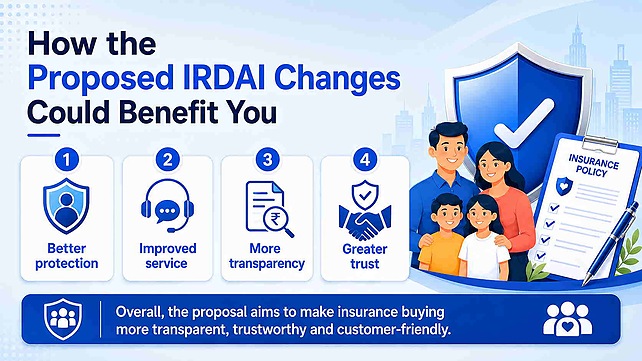
From a customer’s perspective, these proposed changes could make the insurance buying experience more transparent, reliable and reassuring. Stronger accountability may help reduce mis selling and ensure that customers receive clearer advice before purchasing a policy. Better supervision could also improve service quality after the sale, while public disclosure of commissions and related-party dealings may help customers understand the incentives behind product recommendations. Overall, the proposed framework could give customers greater confidence while comparing insurers, intermediaries and insurance products. Public disclosure of commission income and related-party transactions could help customers better understand potential conflicts of interest and the commercial incentives behind product recommendations.
According to the regulator, the proposals are designed to strengthen governance standards, improve accountability and build greater trust across the insurance distribution chain, while also enabling smoother business operations for intermediaries.
Need assistance in choosing the right insurance plan?
Get 1 Crore Life Cover + 7% Digital Discount on Year 1 Premium

Our experts are happy to help you!
This blog is for information and illustrative purposes only and does not purport to any financial or investment services, and do not offer or form part of any offer or recommendation. The information is not and should not be regarded as investment advice or as a recommendation regarding any particular security or course of action.
Every effort is made to ensure that all information contained in this blog is accurate at the date of publication; however, the Tata AIA Life shall not have any liability for any damages of any kind (including but not limited to errors and omissions) whatsoever relating to this material.

 10 mins read