













Call us
Call us
 FOR EXISTING POLICY
Have query on premium, payout or any servicing need?
Call us:
 FOR NEW POLICY
Want to buy a new policy online?
FOR NEW POLICY
Want to buy a new policy online?
FOR NEW POLICY (NRIs)
Note: Consent is provided to Tata AIA Life Insurance Company Limited to contact you by calling/giving missed call to the above numbers.
Thank you for sharing your details. To receive a call from Tata AIA Financial Advisor.
reCAPTCHA is not working.
No relevant search results found.
Popular searches
Continue from where you left of
A 50-lakh investment plan can help you organize a sizeable corpus across different investment options based on your financial goals, time... Read more horizons, and risk tolerance. Instead of placing the entire amount in one asset class, you can divide it acro3zss growth, income, and relatively stable investments. The right allocation can also help address long term wealth creation, regular income needs, and tax2 planning. Whether the objective is retirement, a child’s education, a future purchase or wealth accumulation, understanding how to invest 50 lakhs can help create a structured approach to managing the corpus.Read less
Your premium calculation is in progress

Kindly enter the OTP sent to
Please enter valid OTP
01:60
Didn't receive OTP?
Technical issue detected
please continue without OTP verification
ULIP Calculator
Here’s your customised plan
Get Maturity Benefit
As per assumed rate of return
₹34.57 Lakh
As per assumed rate of return
₹34.57 Lakh
Total premium: ₹11.99 Lakh
Additional Benefits
Life Cover (including Terminal Illness Cover)
Accidental Death Cover
Accidental Total & Permanent Disability
Discount
Applicable if the policy is purchased digitally.
This discount is auto-applied and can't be removed
Tata AIA Premier SIP is a combination of the Tata AIA Smart SIP - Non-participating, Unit-linked, Individual Life Insurance Savings Plan (UIN: 110L174V01) and
Tata AIA Health Buddy - Non-participating, Non-Linked, Individual Health Product (UIN:110N183V01). Both Tata AIA Smart SIP and Tata AIA Health Buddy are also available for sale individually. Product option: Future Secure.
An investment plan for ₹50 lakh involves investing a corpus of ₹50 lakh across different asset classes such as mutual funds, equity, debt instruments, gold, and real estate. The objective is to grow this amount over time and use it for key life goals like retirement, children’s education, or buying a home. Instead of choosing only one option, it focuses on spreading funds across different instruments, so you get stable growth along with better protection from market ups and downs.
A ₹50 lakh investment plan works by dividing the corpus across different investment options according to financial goals, investment horizon and risk tolerance. Each investment generates returns differently. For instance, equity mutual funds are market linked, fixed deposits generate interest, bonds can provide interest payments, and real estate can generate rental income or appreciation in value.
A three step framework can explain how the ₹50 lakh corpus can be put to work:
The first step is to divide the ₹50 lakh across different asset classes rather than putting the entire amount into one investment. The allocation can include equity, debt or fixed income, gold and other assets, depending on the investor’s risk profile and financial requirements.
Once allocated, each portion generates returns according to the nature of the investment. Equity and mutual funds can generate market linked returns, fixed deposits earn interest, bonds can provide interest payments, and real estate may generate rental income and potential appreciation. The returns are therefore not uniform across the entire ₹50 lakh corpus.
The portfolio can be reviewed periodically as the value of different investments changes or when the investor’s financial goals and risk tolerance change. Rebalancing can help bring the allocation back towards the intended mix.
The same ₹50 lakh corpus can be allocated differently depending on the investor’s risk profile:
| Investor profile | Equity and growth assets | Debt and fixed income | Gold and other assets | Total |
|---|---|---|---|---|
| Conservative | 20% ₹10 lakh | 60% ₹30 lakh | 20% ₹10 lakh | ₹50 lakh |
| Moderate | 50% ₹25 lakh | 35% ₹17.5 lakh | 15% ₹7.5 lakh | ₹50 lakh |
| Aggressive | 70% ₹35 lakh | 20% ₹10 lakh | 10% ₹5 lakh | ₹50 lakh |
Once invested, the value of each component can change according to its underlying performance and market conditions. The investor can review the portfolio periodically and adjust the allocation when financial goals, investment horizons, or risk tolerance changes.
These allocations are illustrative and do not represent a fixed formula for investing ₹50 lakh. The actual allocation depends on the investor’s circumstances, existing investments, liquidity requirements, and financial objectives.
Investing ₹50 lakh through a structured plan can help you organise the corpus around different financial needs instead of treating the entire amount as a single investment.
The fifty lakh investment plan offers many benefits, some of which are as follows:
By investing regularly, you can take advantage of compounding for wealth creation in the long term. Over time, gains start generating additional gains.
A well-designed plan supports you during emergencies, covering unforeseen expenses. It reduces financial burden.
This plan supports major goals like buying a home, education, or retirement by building a focused corpus over time.
Depending on the investment type, you may get tax2 benefits such as deductions or tax-free growth, improving your final 50 lakh investment returns.
By diversifying across multiple assets, you reduce dependency on any single investment. This helps protect your capital during market ups and downs.
After understanding the benefits of ₹50 lakh investment plan, let's understand where to invest 50 lakhs in India:
Equity investments can offer long-term capital growth but are exposed to market fluctuations. Equity mutual funds provide access to a diversified portfolio managed according to the selected fund strategy.
Fixed deposits can provide interest at a rate specified by the bank for the selected tenure. They may suit investors looking for relatively stable returns, subject to applicable terms and conditions.
Debt mutual funds and other fixed income instruments invest in debt securities. Their returns and market values can vary depending on interest rates, credit quality, and the underlying securities.
Real estate can potentially provide rental income and capital appreciation. However, property generally has lower liquidity than financial investments and may involve transaction, maintenance, and other costs.
Gold can be held physically or through financial instruments such as Gold ETFs. Its value can fluctuate with market conditions, and it does not provide a fixed return.
Certain insurance products, including ULIPs, combine life cover with investment components. The investment component is linked to selected funds, while the policy provides insurance benefits according to its terms.
| Investment type | Returns | Risk | Liquidity | Life cover | Tax benefit |
|---|---|---|---|---|---|
| Equity and equity mutual funds | Market linked | High | Generally high | No | Depends on the investment and applicable tax 2 rules |
| Fixed deposits | Interest based | Relatively low | Moderate | No | Depends on the type of deposit and applicable provisions |
| Debt investments | Market or interest linked | Low to moderate | Generally moderate to high | No | Depends on the instrument and applicable tax 2 rules |
| Real estate | Rental income and market linked appreciation | Moderate to high | Low | No | Certain tax 2 benefits may apply subject to applicable conditions |
| Gold and Gold ETFs | Market linked | Moderate to high | Gold ETFs generally have higher liquidity than physical gold | No | Depends on the investment structure and applicable tax2 rules |
| ULIPs | Market linked | Depends on fund selection | Subject to policy terms and lock in conditions | Yes | Tax 2 benefits may apply subject to prevailing conditions |
When buying an investment plan for 50 lakh, consider the following:
A 50 lakh investment plan allows investing in various types of financial assets for wealth building over time. Instead of depending on a single investment, building a diversified portfolio can support stable returns and protect your corpus. The portfolio of diversified asset holdings can play a significant role in protecting your future by offering the desired returns. The right strategy, discipline, and periodic review enable your ₹50 lakh investment to support your financial future.
1.
You could use fixed deposits, dividend stocks, rental property, or SWP in mutual funds to create a stable monthly income.
2.
Market volatility, inflation, less liquidity in real estate assets, and default risk in debt instruments are the major risks of investing in Rs. 50 lakh.
3.
Diversify by allocating funds across equity, debt, gold, real estate, and mutual funds to spread risk and balance returns.
4.
Returns from a ₹50 lakh investment depend on the selected best investment for 50 lakhs, allocation, investment horizon and prevailing market conditions. Different assets have different return potential and risks.
5.
You can lower the risk with diversification, disciplined investing, regular portfolio review, and avoid overexposure to one asset class.
The linked insurance product do not offer any liquidity during the first five years of the contract. The policy holder will not be able to surrender/withdraw the monies invested in linked insurance products completely or partially till the end of the fifth year.
Premier SIP is designed for combination of Benefits of two individual and separate products named (1) Tata AIA Life Insurance Tata AIA Smart SIP - Non-participating, Unit-linked, Individual Life Insurance Savings Plan (UIN: 110L174V02) and (2) Tata AIA Health Buddy - Non-participating, Non-Linked, Individual Health Product (UIN:110N183V02). Product option: Future Secure These products are also available for sale individually without the combination offered/suggested.
Param Raksha Life Pro+ is designed for combination of Benefits of two individual and separate products named (1) Tata AIA Smart Sampoorna Raksha Supreme Unit Linked, Non-Participating Individual Life Insurance Plan (UIN: 110L179V02) and (2) Tata AIA Health Buddy, Non-Participating, Non-Linked, Individual Health Product (UIN: 110N183V02). These products are also available for sale individually without the combination offered/suggested.
If your policy offers variable benefits, then the illustrations on this page will show two different rates of assumed future investment returns. Currently these are assumed Rate of returns as 4% p.a. and 8% p.a. These assumed rates of return are not guaranteed, and these are not the upper or lower limits of what you might get back, as the value of your policy is dependent on a number of factors including actual future investment performance.
Some benefits are guaranteed, and some benefits are variable with returns based on the future performance of your insurer carrying on life insurance business. If your policy offers guaranteed benefits, then these will be clearly marked “guaranteed’ in the illustration table on this page. If your policy offers variable benefits, then the illustrations on these pages will show two different rates of assumed future investment returns. Currently these are assumed Rate of returns as 4% p.a. and 8% p.a. These assumed rates of return are not guaranteed, and these are not the upper or lower limits of what you might get back, as the value of your policy is dependent on a number of factors including actual future investment performance.
2No Goods and Service Tax shall be applicable on Individual life insurance products as per prevailing laws. Tax laws are subject to amendments from time to time. If any imposition (tax or otherwise) is levied by any statutory or administrative body under the Policy, Tata AIA Life Insurance Company Limited reserves the right to claim the same from the Policyholder.
3All funds open for new business which have completed 5 years since inception are rated 4 or 5 Star by Morningstar as of August 2025.
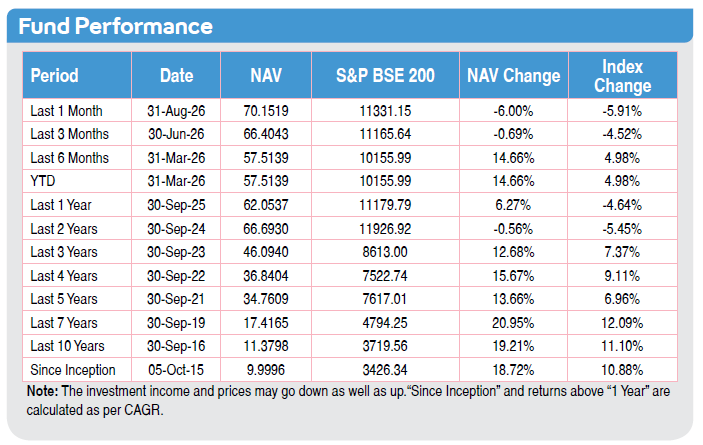
4Data from our Tata AIA fund fact sheet shows the performance of Tata AIA Multi Cap fund & SFIN NO: ULIF 060 15/07/14 MCF110 as on September 2026. Benchmarked with Nifty 50
5©2025 Morningstar. All rights reserved. The Morningstar name is a registered trademark of Morningstar, Inc. in India and other jurisdictions. The information contained here: (1) includes the proprietary information of Morningstar, Inc. and its affiliates, including, without limitation, Morningstar India Private Limited (“Morningstar”); (2) may not be copied, redistributed or used, by any means, in whole or in part, without the prior, written consent of Morningstar; (3) is not warranted to be complete, accurate or timely; and (4) may be drawn from data published on various dates and procured from various sources and (5) shall not be construed as an offer to buy or sell any security or other investment vehicle. Neither Morningstar, Inc. nor any of its affiliates (including, without limitation, Morningstar) nor any of their officers, directors, employees, associates or agents shall be responsible or liable for any trading decisions, damages or other losses resulting directly or indirectly from the information.
6The Insured Amount under Terminal Illness with Term Booster option (in Health Buddy) is payable on earlier of death or diagnosis of Terminal illness of the Life Insured. Please refer Terms and Conditions for more details.
Linked Life Insurance products are different from traditional insurance products and are subject to risk factors.
The premium paid in Unit Linked Life Insurance policies are subject to investment risks associated with capital markets and the NAVs of the units may go up or down based on the performance of fund and factors influencing the capital market and the insured is responsible for his/her decisions. The various funds offered under this contract are the names of the funds and do not in any way indicate the quality of these plans, their future prospects and returns. On survival to the end of the policy term, the Total Fund Value including Top-Up Premium Fund Value valued at applicable NAV on the date of Maturity will be paid.
The fund is managed by Tata AIA Life Insurance Company Ltd. (hereinafter the “Company”). Tata AIA Life Insurance Company Limited is only the name of the Insurance Company & Tata AIA Smart SIP & Tata AIA Smart Sampoorna Raksha Supreme is only the name of the Unit Linked Life Insurance contract and does not in any way indicate the quality of the contract, its future prospects or returns.
Please know the associated risks and the applicable charges, from your insurance agent or the Intermediary or policy document issued by the insurance company.
The various funds offered under this contract are the names of the funds and do not in any way indicate the quality of these plans, their future prospects and returns.
Buying a Life Insurance policy is a long-term commitment. An early termination of the policy usually involves high costs, and the Surrender Value payable may be less than the all the Premiums Paid.
Life insurance cover is available under the solution. For details on products, associated risk factors, terms and conditions please read Sales Brochure carefully before concluding a sale.
L&C/Advt/2026/Apr/2514




 Multicap fund delivered 13.66% returns (Benchmark: 6.96%)4