
















Call us
Call us
 FOR EXISTING POLICY
Have query on premium, payout or any servicing need?
Call us:
 FOR NEW POLICY
Want to buy a new policy online?
FOR NEW POLICY
Want to buy a new policy online?
FOR NEW POLICY (NRIs)
Note: Consent is provided to Tata AIA Life Insurance Company Limited to contact you by calling/giving missed call to the above numbers.
Thank you for sharing your details. To receive a call from Tata AIA Financial Advisor.
reCAPTCHA is not working.
No relevant search results found.
Popular searches
Continue from where you left of
Financial planning refers to the process of managing the finances to reach your financial goals. Defining financial objectives and making a... Read more suitable plan are the key steps in it. Moreover, regular review and portfolio adjustment are important to optimise the strategy. One must understand their current financial position and determine future targets to create an appropriate plan. Read less
Your premium calculation is in progress

Your details have been successfully submitted. A representative from Tata AIA Life Insurance will call you soon.
Your details could not be saved.
Please try again.
Kindly enter the OTP sent to
Please enter valid OTP
01:60
Didn't receive OTP?

Investment Calculator
Premier SIP Calculator
Here’s your customised plan
Get Maturity Benefit
As per assumed rate of return
₹34.57 Lakh
As per assumed rate of return
₹34.57 Lakh
Total premium: ₹11.99 Lakh
Additional Benefits
Life Cover (including Terminal Illness Cover)
Accidental Death Cover
Accidental Total & Permanent Disability
Discount
Applicable if the policy is purchased digitally.
This discount is auto-applied and can't be removed
Tata AIA Premier SIP is a combination of the Tata AIA Smart SIP - Non-participating, Unit-linked, Individual Life Insurance Savings Plan (UIN: 110L174V01) and
Tata AIA Health Buddy - Non-participating, Non-Linked, Individual Health Product (UIN:110N183V01). Both Tata AIA Smart SIP and Tata AIA Health Buddy are also available for sale individually. Product option: Future Secure.
Financial planning is a defined strategy to manage your finances to obtain the best possible benefits. It involves preparing for various lifestages such as marriage, parenthood and retirement. Moreover, it requires regular review and portfolio adjustment. It can act as a roadmap to achieve your financial objectives with suitable strategies.
The following are the types of financial planning:
Tax planning
It involves managing your income, expenditure, and investments to lower the tax burden by taking advantage of available tax deductions and exemptions. It requires investing in eligible assets and proper income tax filing.
Estate planning
It entails preparing a legally binding 'will' that defines wealth distribution among your family members. It helps avoid future disputes in the family and unwanted delays due to government procedures.
Retirement planning
It involves determining the fund corpus or income you will need after retirement to lead a comfortable life. Inflation, healthcare needs and life expectancy are considered in it. NPS, EPF, PPF and annuity plans can be used for meeting retirement needs.
Philanthropic planning
It includes charity in one's long-term financial objectives. Direct donation, endowment funds, charitable trusts or personal 'wills' can be useful.
Education funding planning
It entails saving funds for the child's educational needs in school/college or overseas institutions. Sukanya Samriddhi Yojana (SSY), mutual funds, or SIPs can be used to help fulfil your child's dreams.
Investment planning
It involves choosing suitable investment instruments to protect your family's financial future. It requires finding the right investment options aligned with your needs and risk tolerance.
Insurance planning
This entails investing in appropriate insurance policies to safeguard your family during unforeseen events. Life or health insurance, along with suitable riders, can offer the required protection.
Budgeting
It is the preparation of a monthly or yearly plan for your savings and expenses based on your income. It is the foundation of all your financial decisions that help you decide how to manage your money. The 50/30/20 rule and zero-budgeting are commonly used strategies.
Here is how you can create a financial plan:
Identify specific, measurable and time-bound objectives, such as buying property, funding education or retiring comfortably at a certain age.
Calculate your total income, regular expenses, existing assets, outstanding liabilities and current savings to understand where you stand financially today.
Allocate your income purposefully across necessities, discretionary spending and savings, treating savings as a mandatory expense rather than an option.
Set aside three to six months of living expenses in liquid instruments to handle unexpected situations without disrupting long-term financial plans.
Choose appropriate investment instruments based on your goals, risk tolerance and timelines, ensuring proper diversification across asset classes for balanced growth.
Examine your financial plan periodically to accommodate life changes, income variations, or market shifts, keeping your strategy aligned with evolving priorities.
Building a financial plan offers various benefits, some of which are as follows:
Tax efficiency
Optimises your tax burden through deductions and exemptions, allowing potential gains from savings and investments.
Improved money management
Brings clarity to income and expenses, which helps control overspending, ensures systematic saving and informed investment decisions for wealth building.
Goal achievement
Provides a structured approach to reach short-term and long-term objectives through disciplined saving and strategic investing aligned with your priorities.
Risk management
Identifies potential financial risks and implements necessary measures through insurance and diversification to minimise losses and preserve capital.
Financial security
Creates a safety net through emergency funds, adequate insurance and diversified investments that protect your family during unforeseen circumstances.
The following are the lifestages when you can consider creating a financial plan:
Early career
Starting financial planning in your twenties provides maximum time for wealth accumulation through the power of compounding on regular savings and investments.
Major life events
Marriage, parenthood, or buying a home requires reassessing finances, adjusting budgets and aligning goals with new responsibilities and priorities.
Income changes
Promotions, job switches or salary increments demand revaluation of savings rates, investment allocations and upgrading insurance covers to match increased income.
Mid-career phase
Your thirties and forties are important for aggressive wealth building, balancing multiple goals like children's education, property purchases and retirement planning.
Pre-retirement years
As retirement approaches, shift focus on capital preservation, debt reduction and ensuring adequate corpus for post-retirement lifestyle and healthcare needs.
Health concerns
Medical issues highlight the importance of adequate health insurance, emergency funds, and reviewing existing coverage to handle treatment costs without financial burden.
Our experts are happy to help you!
Our experts are happy to help you!
Financial planning enables you to take control of your funds and build a secure future through systematic management of income, expenses, and investments. It is not limited to wealthy individuals; anyone with a regular income can benefit from structuring their finances thoughtfully. The key is starting early, staying disciplined, and reviewing your plan regularly as life circumstances evolve.
1.
Financial planning is the process of setting financial goals, evaluating your resources, and creating strategies to manage income, expenses, savings, and investments to reach those goals.
2.
Long-term financial planning focuses on achieving goals that are years or decades away, such as retirement or buying a house. It involves consistent saving and investing to grow wealth over time.
3.
Short-term financial planning deals with immediate goals, usually within a year, like paying off debts, taking an international trip or building an emergency fund. It emphasises on budgeting and liquidity.
4.
Start by understanding your financial goals, risk tolerance, and timeline. Diversify your investments across different assets, review them regularly, and adjust your plan as your situation changes.
5.
Financial planning helps you manage funds efficiently, prepares you for emergencies, achieves your goals, provides financial security, reduces stress, and ensures your income, savings, and investments work together.
6.
The seven steps of financial planning are:
● Set financial goals ● Assess your current financial situation ● Build a financial plan ● Implement the plan ● Monitor your progress ● Review and adjust as needed ● Repeat the process regularly
7.
The financial planning process is a step-by-step approach. Assess your finances, set goals, create a plan, implement it, track progress, and make adjustments to stay on track toward financial stability and long-term objectives.
New user? Our experts are happy to help.
Thank you for sharing your details.
Our representative will contact you soon.








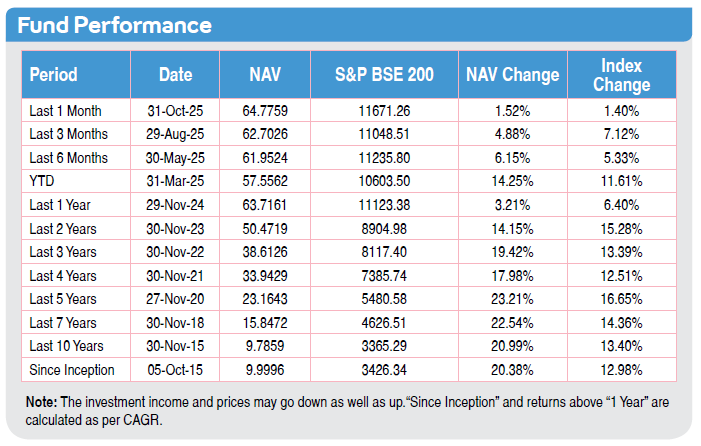
 Multicap fund delivered 23.21% returns (Benchmark: 16.65%)4