












Call us
Call us
 FOR EXISTING POLICY
Have query on premium, payout or any servicing need?
Call us:
 FOR NEW POLICY
Want to buy a new policy online?
FOR NEW POLICY
Want to buy a new policy online?
FOR NEW POLICY (NRIs)
Note: Consent is provided to Tata AIA Life Insurance Company Limited to contact you by calling/giving missed call to the above numbers.
Thank you for sharing your details. To receive a call from Tata AIA Financial Advisor.
reCAPTCHA is not working.
No relevant search results found.
Popular searches
Continue from where you left of
An investment plan for 15 years is a way to invest money for a fixed long-term period. It helps your savings grow gradually while giving enough... Read more time to manage market changes. This is ideal for goals that are important but not urgent. People can choose the 15 year investment plans for covering educational expenses, long-term savings, and wealth creation. The best 15 year investment plans are usually better than short-term options. Read less
Your premium calculation is in progress

Kindly enter the OTP sent to
Please enter valid OTP
01:60
Didn't receive OTP?
Technical issue detected
please continue without OTP verification
ULIP Calculator
Here’s your customised plan
Get Maturity Benefit
As per assumed rate of return
₹34.57 Lakh
As per assumed rate of return
₹34.57 Lakh
Total premium: ₹11.99 Lakh
Additional Benefits
Life Cover (including Terminal Illness Cover)
Accidental Death Cover
Accidental Total & Permanent Disability
Discount
Applicable if the policy is purchased digitally.
This discount is auto-applied and can't be removed
Tata AIA Premier SIP is a combination of the Tata AIA Smart SIP - Non-participating, Unit-linked, Individual Life Insurance Savings Plan (UIN: 110L174V01) and
Tata AIA Health Buddy - Non-participating, Non-Linked, Individual Health Product (UIN:110N183V01). Both Tata AIA Smart SIP and Tata AIA Health Buddy are also available for sale individually. Product option: Future Secure.
An investment plan for 15 years is a financial plan where you invest money and stay invested for fifteen years. You can invest through regular payments or a lump sum. These plans may be market-linked7, offer fixed returns, or combine both. In this plan, you give your money time to grow steadily while managing risks in a planned way. Over time, this approach often delivers better results than frequent buying and selling.
A 15-year horizon gives investors time to align their investments with long-term financial goals. The best investment plan for 15 years can differ based on risk tolerance, liquidity needs, expected growth, and the purpose of investing. Some options focus on market-linked growth, while others are designed around retirement, disciplined savings, or diversification.
A ULIP combines life insurance with market-linked investment. A ULIP plan for 15 years can be considered by individuals who want life cover alongside investment exposure. The policyholder can select from available funds based on their risk preference, subject to the product terms.
ULIPs also have a lock-in period and charges that need to be understood before investing. Tax2 treatment and ULIP tax 2 benefits are subject to prevailing tax laws and applicable policy conditions.
Equity mutual funds provide exposure to a portfolio of shares managed by a fund house. A 15-year horizon can be relevant for investors seeking long-term capital growth and who can tolerate market fluctuations.
Investors may also consider a 15 year SIP investment, where fixed amounts are invested periodically rather than committing the entire amount at once. The suitability depends on the investor’s financial goals, risk profile, and investment capacity.
Retirement-focused options can help investors build a corpus over their working years. NPS is one such option, while other retirement or pension products may combine savings with features designed for post-retirement financial needs.
These options may be relevant when the 15-year investment horizon is linked to retirement planning rather than short-term financial requirements.
PPF can be considered for long-term savings where the investor is comfortable with its prescribed tenure, contribution rules, and withdrawal conditions. It can form part of a diversified portfolio for investors who prefer an investment avenue with a long-term savings structure.
Gold can be used as a diversification component alongside financial assets. Investors may consider instruments such as gold ETFs or other permitted forms of gold investment depending on their objectives and risk preferences.
A diversified approach can help reduce reliance on a single asset class as part of a long-term investment plan in India.
A 15-year investment plan works slowly at first. In the early years, returns may appear small. Many times, investors expect faster growth and feel unsure. As the years pass, compounding starts to show its effect. Your returns begin to grow on earlier gains. In the later years, the focus often moves to protecting what has been built. Staying invested for the full term helps reduce the impact of short-term market ups and downs.
A 15-year investment period suits many financial needs. Below are some key reasons.
The return or rate associated with a 15-year investment depends on the type of investment selected. Different products use different mechanisms to determine the value accumulated over time. For market-linked investments, the outcome depends on the performance of the underlying assets, while fixed-income products follow their applicable interest-rate structure.
For a market-linked investment, the value can rise or fall according to the performance of the securities or funds in which the capital is invested. Therefore, the final value cannot generally be known in advance.
Over a longer period, compounding can have a significant effect on the accumulated corpus when returns remain invested. The actual outcome, however, depends on the applicable rate and frequency of returns.
For a regular contribution strategy such as a SIP, the accumulated value depends on the amount invested, investment frequency, duration, and applicable returns. Consequently, a 15 year SIP investment does not have one predetermined maturity value.
For insurance-linked products such as ULIPs, the fund value depends on the performance of the selected funds, charges, and other applicable policy conditions. Policyholders should therefore examine the product documents before assessing its potential outcome.
Moreover, compounding plays a role across different types of investment plans. Over longer periods, it can contribute significantly to the accumulated corpus, although the actual outcome will vary depending on the investment’s performance and the extent to which returns are reinvested.
Choosing an investment for 15 years involves more than comparing potential returns. The investment needs to fit the purpose for which the funds are being accumulated and the investor's ability to remain invested throughout the intended period.
Start by identifying what the investment is intended for. A house purchase, children's education, retirement or another long-term requirement may have different timelines and funding needs.
Clear financial goal planning can help determine how much needs to be invested and which investment structure may be appropriate.
A 15-year horizon does not remove investment risk. Equity-oriented and other market-linked investments can experience fluctuations, while different debt and savings products have their own risks and limitations.
Consider how much variation in the value of the investment you can tolerate before selecting an option.
Look beyond the projected return and examine factors such as liquidity, lock-in period, charges, taxation 2, life cover, and flexibility.
For example, when comparing ULIP vs mutual fund for 15 years, the comparison should consider the differences in insurance coverage, costs, investment flexibility, taxation 2 and liquidity rather than looking at returns alone.
A 15-year goal can be funded through a lump-sum investment, regular contributions, or a combination of both. SIPs can provide a structured way of investing periodically, while a lump sum may be suitable in circumstances where funds are already available.
The choice should reflect cash flow, investment capacity, and the nature of the financial goal.
Financial circumstances can change over 15 years. Income, expenses, family responsibilities, risk tolerance, and financial goals may all evolve.
Periodic reviews can help determine whether the existing allocation continues to match the intended objective without making unnecessary changes in response to short-term market movements.
Before choosing the 15 years best investment plan, consider the following points.
A 15-year investment horizon can provide a structured framework for pursuing long-term financial objectives. Its benefits depend on the investment chosen and how consistently the plan is maintained.
A longer investment horizon gives an investor more time to accumulate a corpus through regular contributions or an initial investment. Market-linked investments also have more time to experience different market cycles, although this does not eliminate the possibility of losses.
This makes a 15-year horizon relevant for long term wealth creation and goals that are several years away.
When returns remain invested, future returns can be generated on both the original amount and accumulated returns. This is the power of compounding, and its effect can become more noticeable over longer periods.
However, the benefit depends on the nature of the investment and the returns it generates.
A defined 15-year period can encourage investors to contribute regularly towards a specific goal. This can be particularly useful when the investment is linked to retirement, education, or another planned financial requirement.
A long horizon allows investors to divide a major financial objective into smaller and more manageable investment commitments. It can also provide scope to review the portfolio as the goal approaches.
Certain insurance-linked investment products, such as ULIPs, combine life cover with market-linked investment. This can be relevant for investors who are specifically looking for both features within one policy, subject to the product's terms, charges, and conditions.
A 15-year investment plan can provide a structured approach to pursuing long-term financial goals, but the appropriate option depends on the investor's objectives, risk tolerance, liquidity requirements, and investment capacity. ULIPs, mutual funds, retirement-oriented options, PPF, and other investments have different features and risks. Understanding these differences can help investors select an option that fits their circumstances. A clearly defined goal, regular review and a suitable investment horizon can make long-term planning more structured while allowing sufficient time for potential corpus growth.
1.
Yes. A 15-year investment plan is suitable for long-term goals like education planning or wealth creation. It gives enough time for growth and stability.
2.
The main risks include market fluctuations, inflation, and limited liquidity. Staying invested for the full term helps reduce short-term risk.
3.
Most plans provide regular statements and online tracking options. Periodic reviews help ensure the plan stays aligned with your goals.
4.
Charges depend on the plan type. They may include management or administrative fees. Understanding them early helps protect long-term returns.
The linked insurance product do not offer any liquidity during the first five years of the contract. The policy holder will not be able to surrender/withdraw the monies invested in linked insurance products completely or partially till the end of the fifth year.
Premier SIP is designed for combination of Benefits of two individual and separate products named (1) Tata AIA Life Insurance Tata AIA Smart SIP - Non-participating, Unit-linked, Individual Life Insurance Savings Plan (UIN: 110L174V02) and (2) Tata AIA Health Buddy - Non-participating, Non-Linked, Individual Health Product (UIN:110N183V02). Product option: Future Secure These products are also available for sale individually without the combination offered/suggested.
Param Raksha Life Pro+ is designed for combination of Benefits of two individual and separate products named (1) Tata AIA Smart Sampoorna Raksha Supreme Unit Linked, Non-Participating Individual Life Insurance Plan (UIN: 110L179V02) and (2) Tata AIA Health Buddy, Non-Participating, Non-Linked, Individual Health Product (UIN: 110N183V02). These products are also available for sale individually without the combination offered/suggested.
If your policy offers variable benefits, then the illustrations on this page will show two different rates of assumed future investment returns. Currently the gross investment returns are stipulated as 4% p.a. and 8% p.a. These assumed rates of return are not guaranteed, and these are not the upper or lower limits of what you might get back, as the value of your policy is dependent on a number of factors including actual future investment performance.
Some benefits are guaranteed, and some benefits are variable with returns based on the future performance of your insurer carrying on life insurance business. If your policy offers guaranteed benefits, then these will be clearly marked “guaranteed’ in the illustration table on this page. If your policy offers variable benefits, then the illustrations on these pages will show two different rates of assumed future investment returns. Currently the gross investment returns are stipulated as 4% p.a. and 8% p.a. These assumed rates of return are not guaranteed, and these are not the upper or lower limits of what you might get back, as the value of your policy is dependent on a number of factors including actual future investment performance.
2No Goods and Service Tax shall be applicable on Individual life insurance products as per prevailing laws. Tax laws are subject to amendments from time to time. If any imposition (tax or otherwise) is levied by any statutory or administrative body under the Policy, Tata AIA Life Insurance Company Limited reserves the right to claim the same from the Policyholder.
3All funds open for new business which have completed 5 years since inception are rated 4 or 5 Star by Morningstar as of August 2025.
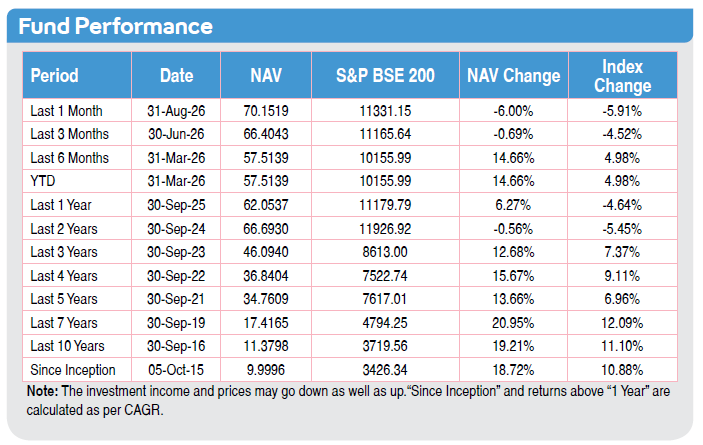
4Data from our Tata AIA fund fact sheet shows the performance of Tata AIA Multi Cap fund & SFIN NO: ULIF 060 15/07/14 MCF110 as on September 2026. Benchmarked with Nifty 50
5©2025 Morningstar. All rights reserved. The Morningstar name is a registered trademark of Morningstar, Inc. in India and other jurisdictions. The information contained here: (1) includes the proprietary information of Morningstar, Inc. and its affiliates, including, without limitation, Morningstar India Private Limited (“Morningstar”); (2) may not be copied, redistributed or used, by any means, in whole or in part, without the prior, written consent of Morningstar; (3) is not warranted to be complete, accurate or timely; and (4) may be drawn from data published on various dates and procured from various sources and (5) shall not be construed as an offer to buy or sell any security or other investment vehicle. Neither Morningstar, Inc. nor any of its affiliates (including, without limitation, Morningstar) nor any of their officers, directors, employees, associates or agents shall be responsible or liable for any trading decisions, damages or other losses resulting directly or indirectly from the information.
6The Insured Amount under Terminal Illness with Term Booster option (in Health Buddy) is payable on earlier of death or diagnosis of Terminal illness of the Life Insured. Please refer Terms and Conditions for more details.
Linked Life Insurance products are different from traditional insurance products and are subject to risk factors.
The premium paid in Unit Linked Life Insurance policies are subject to investment risks associated with capital markets and the NAVs of the units may go up or down based on the performance of fund and factors influencing the capital market and the insured is responsible for his/her decisions. The various funds offered under this contract are the names of the funds and do not in any way indicate the quality of these plans, their future prospects and returns. On survival to the end of the policy term, the Total Fund Value including Top-Up Premium Fund Value valued at applicable NAV on the date of Maturity will be paid.
The fund is managed by Tata AIA Life Insurance Company Ltd. (hereinafter the “Company”). Tata AIA Life Insurance Company Limited is only the name of the Insurance Company & Tata AIA Smart SIP is only the name of the Unit Linked Life Insurance contract and does not in any way indicate the quality of the contract, its future prospects or returns.
Please know the associated risks and the applicable charges, from your insurance agent or the Intermediary or policy document issued by the insurance company.
The various funds offered under this contract are the names of the funds and do not in any way indicate the quality of these plans, their future prospects and returns.
Buying a Life Insurance policy is a long-term commitment. An early termination of the policy usually involves high costs, and the Surrender Value payable may be less than the all the Premiums Paid.
Insurance cover is available under the product. For more details on risk factors, terms and conditions please read sales brochure carefully before concluding a sale.
L&C/Advt/2026/Oct/5802


 Multicap fund delivered 13.66% returns (Benchmark:6.96%)4