
















Call us
Call us
 FOR EXISTING POLICY
Have query on premium, payout or any servicing need?
Call us:
 FOR NEW POLICY
Want to buy a new policy online?
FOR NEW POLICY
Want to buy a new policy online?
FOR NEW POLICY (NRIs)
Note: Consent is provided to Tata AIA Life Insurance Company Limited to contact you by calling/giving missed call to the above numbers.
Thank you for sharing your details. To receive a call from Tata AIA Financial Advisor.
reCAPTCHA is not working.
No relevant search results found.
Popular searches
Continue from where you left of
Life insurance offers more than just financial cover. It provides income protection for your family in case of unexpected events.... Read more It also supports long-term goals like wealth creation and savings. Life insurance can help manage liabilities such as loans and debts. It also ensures financial security and peace of mind for dependents. Overall, it acts as a strong foundation for risk management and future planning. Read less
Join 89 Lakh+ families10 who trusted Tata AIA for their life's milestones.
Your details have been successfully submitted. A representative from Tata AIA Life Insurance will call you soon.
There was some error in submitting details please try again
While you embark on a journey towards financial planning, Life Insurance should be one of the most critical components of the plan. The incredible benefits of life insurance can empower your financial journey by securing your loved ones in your absence.
Beyond its primary purpose of safeguarding your loved ones, life insurance plans provide a range of benefits tailor-made to suit your unique financial needs.
From providing financial protection to your family to accomplishing your future financial goals and retirement planning, life insurance benefits can embrace you with the right steps for a financially independent life. So, here is everything you need to know about the benefits of life insurance policy options.
Protect the financial security of your loved ones with our affordable term insurance plans.
Non-Linked, Non-Participating, Pure Risk, Individual Life Insurance Product (UIN:110N176V12)
Non-Linked, Non-Participating, Pure Risk, Individual Life Insurance Product (UIN: 110N171V15)
Grow your wealth with our guaranteed3 return plans for a fikar-free future and also save tax.
Non-Linked, Non-Participating, Individual Life Insurance Savings Plan (UIN: 110N158V14) | 14T&C apply
Individual, non-linked, participating, Life Insurance Savings Plan (UIN: 110N207V02)
Individual, Non-Linked, Non-participating, Life Insurance Savings Plan (UIN110N163V13)
Our comprehensive plan takes care of your health, wellness, and financial security all in one.
Plan your retirement wisely with a suitable pension plan for peace of mind in your golden years.
Non-Participating, Unit Linked, Individual Life Insurance Pension Plan (UIN: 110L182V09)
A Non-Linked, Non-Participating, Annuity Plan
(UIN:110N161V13) | 21T&C apply
Life insurance is a financial arrangement where the insurer promises to pay a fixed sum assured to the nominee if the policyholder passes away during the policy term. In simple terms, it replaces lost income and helps the family maintain financial stability during difficult times. In return, the policyholder pays regular premiums.
In practice, it is not just a standalone protection product. Many times, it becomes an important part of financial planning, offering stability when unforeseen events disrupt household finances. Worth noting, it focuses more on financial security and continuity than on returns.
Life insurance plays a key role in ensuring financial stability for dependants and long-term goals.
Ensures family members receive financial support if the primary earner is not around
Helps maintain daily household expenses without disruption
Acts as a financial cushion during unexpected life events
Helps clear home loans, personal loans, or other EMIs
Prevents financial burden from shifting to family members
Provides relief during already difficult situations
Secures future needs like children’s education and marriage
Helps ensure long-term plans are not interrupted
Maintains financial continuity even in absence of income
Acts as a foundational layer in a financial portfolio
Balances risk within overall financial planning
Supports other investments by reducing financial pressure
Reduces financial uncertainty for the family
Helps individuals plan long-term goals with confidence
Creates a sense of financial stability in everyday life
Term insurance is a pure protection plan that offers a sum assured as the death benefit to your nominee in the event of your unexpected death during the policy term. You can also purchase the permanent or the whole life insurance policy to ensure the life insurance benefits until 100 years of age.
Benefits of a Term Insurance Plan
 A higher sum assured for the premium as compared to other life insurance policies
Affordable premium
While there are no maturity benefits, you can choose the return of premium1 option to receive the premium paid as a maturity benefit if you survive the policy tenure.
Increase the sum assured at different milestones in your life based on changing financial demands
Add riders2 to enhance the sum assured
Flexible premium payment and payout options
The savings insurance plans are designed to provide life cover to secure your family during the policy tenure and offer options to save funds for guaranteed3 returns as the maturity benefit.
Benefits of a savings insurance plan
Dual benefit, life cover and guaranteed returns3
As the returns are guaranteed, you can decide on the required funds based on your financial goals and save them for the future.
Flexible premium payment and payout options
Options to choose a longer policy tenure for long-term savings benefit
The ULIP plans provide life cover for the policy tenure and offer options to invest funds in financial securities for the maturity benefit. It has a five-year lock-in period.
Benefits of ULIP Plans
Dual benefit, life cover, and market-linked returns5
Options to invest in financial securities based on your risk profile, such as in the equity, hybrid, or debt funds
Options to switch between the fund options based on the prevailing economic conditions
Partial withdrawals applicable after the five-year lock-in period
Flexible premium payment and payout options
Enhance the sum assured with add-on riders2
Options to choose a longer policy tenure for long-term savings benefit
Retirement plans have the option to save funds for the long term, ensuring to provide the same as a regular monthly income for your life after retirement.
Benefits of retirement plans
Pension plans with the life cover benefit
Guaranteed returns4 for regular income for life after retirement
Annuity plans with immediate and deferred annuity solutions
Flexible premium payment and payout options
Enhance the sum assured with add-on riders2
Life insurance benefits can help you accomplish your future financial goals. For example, if you want to start a business after ten years, you must plan for it. The major considerations include your dependent family’s financial security, a lump sum for starting the business, and a regular income until your business stabilises.
With our Tata AIA Savings Plan, you can calculate the required funds based on your business plan and save funds for the same during the desired time frame, the policy tenure.
While you save funds, your family is financially secure with the life cover. Furthermore, you can receive the guaranteed3 maturity benefit as a combination of a lump sum and regular income. The lump sum can be used to start the business, and the regular income for a defined period can be utilised to manage the routine financial expenses until the business stabilises.
While planning for retirement, you tend to choose financial products that help you save funds for your retirement and offer a regular income as the pension for your life post-retirement. However, in the process of accumulating funds for retirement, you may not consider or be able to afford to purchase a life insurance plan to secure your family in the event of your unexpected demise.
With our Tata AIA Life Insurance Retirement Solutions, you can satisfy both the life insurance benefits and the pension requirements in a single policy. Furthermore, you can customise it based on your financial requirements over the long term, such as choosing the premium payment and payout options.
If you have immense family financial responsibilities, your priority in financial planning will be to purchase a life cover to secure your family in your absence. However, investing for wealth creation is certainly equally important for you to manage your personal financial goals.
Due to increased financial responsibilities, affording two different financial products can be difficult if you are the sole earning member. With our Tata AIA Life Insurance Wealth Creation Insurance Plans, you can secure your family with the death benefit while investing for your future with market-linked5 returns based on your risk profile and affordability.
With the changing lifestyle practices and unhealthy habits, developing a critical illness can be a very common scenario in the current fast-paced global world. Also, soaring medical and hospitalisation costs make managing a financial emergency difficult.
With the add-on rider options, you can enhance the benefits of life insurance policy options to increase the financial benefit of paying for such expenses during the policy tenure.
For example, suppose you are diagnosed with cancer during the policy tenure. In that case, if you had purchased the rider for the critical illness benefit with the regular income option, you can utilise it to pay for the regular chemotherapy sessions.
While life insurance plans offer a range of benefits, you can further maximise the benefits by taking a few important steps, as detailed below:
At a younger age, you will have a healthier body, reducing the risk of developing a disease or death. Therefore, you can purchase life insurance with a higher sum assured at a lower premium compared to purchasing it when you get older.
Also, at a younger age, you will have reduced financial responsibilities allowing you to invest more and develop the habit of continuing it regularly throughout the policy tenure.
When you choose a longer policy tenure, you can stay insured for a long time for the benefits of life insurance and pay lesser premiums as the risk is spread over the long term.
Compare and purchase the different types of life insurance plans that provide savings or investment benefits, or both the benefits as in the Tata AIA Life Insurance Combo Plans apart from the life cover to enhance the financial benefits.
As riders2 enhance life insurance benefits and financial protection during the policy term, you can compare the available riders and choose the appropriate options. For instance, the rider for the critical illness benefit will provide a lump sum to pay for your medical expenses if you are diagnosed with a critical illness during the policy term.
Further, the rider for the waiver of premium benefit will waive off future premiums if you are affected due to a total or permanent disability due to an accident.
When making a financial plan for your life, your focus predominantly lies on purchasing savings and investment plans for better returns. However, if you are the sole breadwinner for your family or contribute to your family financially to any extent, your family’s financial security should be of prime importance.
It will ensure your family can manage their routine expenses and future financial commitments in your absence. Moreover, you can increase your savings or wealth in addition to the life cover by purchasing savings insurance or wealth creation life insurance plans.
Life insurance plans provide guaranteed death benefits3 or maturity benefits based on the occurrence of the insured events, subject to the policy conditions. As life insurance benefits are guaranteed, you can make a calculated decision on the financial requirements considering your income, lifestyle, expenses, future financial commitments, loans and liabilities to make a well-informed decision and invest better.
As your family’s financial commitments and your responsibilities increase, you will be perplexed about how your family can manage their life without your income. And thoughts in this regard can keep you depressed.
You can lead a peaceful life with life insurance benefits until death or when your family becomes independent.
Choosing a life insurance plan requires careful evaluation of personal and financial needs.
Include education, healthcare, and daily living costs
Choose coverage that realistically meets these needs
Understand that expenses increase over time
Current coverage may not be sufficient in the future
Factor in rising cost of living while selecting sum assured
Younger age usually means lower premium costs
Early purchase provides better affordability and options
Age impacts both coverage and policy flexibility
Premium should fit within monthly budget comfortably
Avoid overcommitting to high premiums
Ensure long-term continuity of policy payments
Look for flexible premium payment options
Check customisable policy features
Consider payout flexibility based on future needs
Supports long-term dependants and liabilities
Reduces the risk of coverage gaps
Includes options like critical illness or accidental death cover
Provides broader protection at relatively low additional cost
Faster processing during claims becomes crucial
Strong claim settlement record adds reliability and trust
With advanced technology and the urge to provide convenient digital services, we have introduced the options to compare and purchase many of our life insurance plans online.
Here are a few steps in this direction.
Visit our Tata AIA Life Insurance Page.
Browse through the 'Where Do I?’ option.
Choose the 'Buy Online' option from the list of available options.
You can view a list of all the applicable products you can purchase online.
You can choose the appropriate option if you have decided on the product.
Provide the necessary details and choose the flexible features and the add-on riders2.
Decide on the sum assured, premium payment mode, policy tenure, etc., to determine if it is affordable for the long term.
If you find it affordable, you can go ahead and purchase the life insurance plan. And suppose you feel it is not affordable. In that case, you can revise the inputs, such as choosing a longer policy tenure, reducing the sum assured, etc., to make it affordable and further purchase the policy.
You can utilise our online tools, such as Compare Term Insurance, to compare the benefits of life insurance policy options and Tata AIA Life Insurance Calculators to determine the features of an affordable life insurance policy for your needs.
Our experts are happy to help you!
Our experts are happy to help you!
1.
The living benefits of life insurance plans are as follows:
Add-on rider options - Add-on rider2 options provide additional financial support to manage a financial crisis during s pecific scenarios during the policy period. For example, the rider for the critical or terminal illness benefit provides the applicable sum assured to manage the hospitalisation and medical expenses if you are diagnosed with a critical illness or a terminal illness during the policy term.
Cash value - A part of the premium paid for permanent life insurance plans will be accumulated as a cash value, and interest is earned on the same. It can be used to avail of loans or withdrawn during a financial emergency subject to the policy conditions.
Return of premium option - You can avail of the return of premium1 option to receive the premium paid during the policy tenure as a maturity benefit if you survive the policy period.
Savings and investment benefit - With savings insurance and wealth creation plans, you can utilise a portion of your premium to save and increase your wealth and receive it as a maturity benefit.
2.
The benefits of life insurance for your family can be listed as follows:
Provide a lump sum to manage their financial commitments in your absence.
If you have chosen the regular income payout, it can help them manage their routine expenses.
The life insurance benefits can help them reduce their financial burden by clearing debts, loans, and other liabilities.
Choosing the appropriate riders2 can help them avoid contacting other sources for finances to manage a financial crisis, such as paying for the hospitalisation expenses if you, the family's sole earning member, are diagnosed with a critical illness during the policy term.
With the savings and investment benefits, you can accumulate funds for accomplishing your family’s future financial goals, such as starting a family business, paying for your child’s marriage, etc.
3.
Life insurance plans are predominantly purchased for the death benefit. However, they provide a maturity benefit based on the type of life insurance plan purchased. For example, term insurance with the return of premium option provides the option to receive the premium paid as a maturity benefit.
Furthermore, savings insurance plans and wealth creation insurance plans provide guaranteed returns and market-linked returns5 as the maturity benefit subject to the policy terms and conditions.
4.
If you do not pay your premiums for the life insurance plan on time, your life insurance plan expires and ceases to provide the life insurance benefits.
However, you will get a 30 days grace period to pay the premium for the policy. And if you fail to pay the premium even during this period, your life insurance plan will lapse.
Further, your life insurance provider will offer a revival period post the grace period to reinstate the insurance policy. And if you fail to revive it during this period, the life insurance plan is considered completely lapsed and terminated.
5.
Term life insurance plan provides a life cover to secure your family for a specific policy period. On the other hand, a whole life insurance plan will provide life cover until death. The better among the two will depend on your personal and family financial commitments.
You can choose term insurance if you have a family to take care of all the financial responsibilities after a specific timeframe. And if you have a dependent family throughout your life, whole life insurance is a suitable option.
6.
Life insurance is a good investment tool as it is devised to provide financial protection to your loved ones in your absence.
Furthermore, if you purchase the Unit Linked Insurance Plan (ULIP Plan), you can ensure to secure your family with a life cover while also investing funds in the financial market for market-linked returns5 as the maturity benefit based on your risk profile.
7.
No restriction is defined on the number of riders2 that can be purchased with a life insurance policy.
8.
The various life insurance options are: ●Term Insurance Plans ●Savings Insurance Plans ●Unit Linked Insurance Plans . ●Retirement Plans ●Combo Plans
9.
No restriction is defined on the number of policy years for a life insurance plan. You can purchase it for a definite period or until 100 years of age.
10.
Riders2 cannot be purchased independently. It can be purchased as an add-on option with a base life insurance policy.
11.
The sum assured required in life insurance will depend on your financial requirements. You can consider your income, expenses, future financial commitments, loans, and liabilities to decide on the required funds.
Here are a few steps for a better understanding:
Find the required future earnings - It is based on income and years to retirement.
Find current annual expenses and future financial goals - You must account for the inflation rate while determining this cash flow projection. Therefore, find the present value for these future cash flows by using current interest rates for discounting.
Find the financial loans and liabilities - Add it to the above-calculated value.
Consider your savings and investments - If you have a life cover or have been saving or investing in varied financial products, subtract the total value from the value calculated above.
Determine the sum assured - The total amount calculated from adding the current expenses, future financial goals, loans, and liabilities and subtracting the savings and investments from this value, as described in the previous steps, will give the approximate value for the sum assured required.
You can utilise our Tata AIA Life Insurance Human Life Value Calculator to determine the sum assured and simplify the process.
12.
The life insurance benefits such as the death benefit, the rider benefit, or maturity benefit are exempt from taxation6 under Section 10(10D) of the Income Tax Act 1961 if the premium is less than 10% of the sum assured for life insurance policies issued after 1st April 2012 and 20% for those purchased before 1st April 2012.
13.
Life insurance coverage is based on the type of policy chosen.●Pure protection plan covers the policyholder's death due to natural reasons such as ageing, illness, and accident. It does not cover death due to the influence of alcohol or drugs, pre-existing illness not disclosed during policy inception, suicide within 12 months of the policy tenure, or committing a crime. ●Life insurance with savings and investment benefits covers the maturity benefits. ●Life insurance with riders2 covers specific illnesses and conditions, such as critical illnesses, total and permanent disability due to an accident, etc.
14.
The life insurance premium is calculated based on the following factors:
Type of life insurance plan●Age ●Gender ●Lifestyle ●Life insurance benefits, policy options, and riders2 chosen ●Sum assured required ●Policy period You can choose our online tools, such as the Tata AIA Life Insurance Term Insurance Calculator, to determine the premium for your life insurance plan based on your requirement and desired features.
15.
Here are a few steps to help you choose the best life insurance policy: ●Analyse your financial needs and decide on the sum assured required. ●Analyse your current financial condition and decide on the extent of premium you can afford to pay regularly. ●Compare the life insurance providers based on their products, processes, digital services, and claim settlement ratio to choose the best life insurance provider. ●Understand the different features, add-on riders2 and benefits of life insurance policy options. ●Research the flexible features, rider options, sum assured, policy term, etc., based on your affordability. ●Compare the options, try to customise, and choose the best life insurance policy to suit your financial needs.
The linked insurance product do not offer any liquidity during the first five years of the contract. The policy holder will not be able to surrender/withdraw the monies invested in linked insurance products completely or partially till the end of the fifth year.
Tata AIA Sampoorna Raksha Promise - Non-Linked, Non-Participating, Pure Risk, Individual Life Insurance Product (UIN:110N176V12)
99.45% is the Individual Death Claim Settlement Ratio for FY 2025-26 as per latest audit figures
Tata AIA Maha Raksha Supreme Select - Non-Linked, Non-Participating, Pure Risk, Individual Life Insurance Product (UIN: 110N171V15)
Tata AIA Shubh Flexi Income Plan (UIN: 110N207V02) - Individual, Non-Linked, participating, Life Insurance Savings Plan
The complete name of Tata AIA Fortune Guarantee Plus is Tata AIA Life Insurance Fortune Guarantee Plus (UIN: 110N158V14) - Individual, Non-Linked, Non-Participating, Life Insurance Savings Plan
The complete name of Tata AIA Fortune Guarantee Supreme - Individual, Non-Linked, Non-participating, Life Insurance Savings Plan (UIN110N163V13)
Param Raksha Life Pro+ is designed for combination of benefits of following individual and separate products named (1) Tata AIA Smart Sampoorna Raksha Supreme Unit Linked, Non-Participating Individual Life Insurance Plan (UIN: 110L179V02) and (2) Tata AIA Health Buddy, Non-Participating, Non-Linked, Individual Health Product (UIN: 110N183V02).
Tata AIA Premier SIP is a combination of the Tata AIA Smart SIP, a non-participating, unit-linked, individual life insurance savings plan (UIN: 110L174V02), and Tata AIA Health Buddy, Non-participating, Non-Linked, Individual Health Product (UIN:110N183V01). Both Tata AIA Smart SIP and Tata AIA Health Buddy are also available for sale individually.
These products are also available for sale individually without the combination offered/ suggested. This benefit illustration is the arithmetic combination and chronological listing of combined benefits of individual products. The customer is advised to refer the detailed sales brochure of respective individual products mentioned herein before concluding sale.
Tata AIA Smart Pension Secure (UIN: 110L182V09) - Non-Participating, Unit Linked, Individual Life Insurance Pension Plan
The complete name of Tata AIA Fortune Guarantee Pension Plan is Tata AIA Life Insurance Fortune Guarantee Pension Plan (UIN:110N161V13) - A Non-Linked Non-Participating Individual Life Insurance Plan
1Under Life Promise Plus Option, an amount equal to the 100% of the Total Premiums Paid (excluding loading for modal premiums) shall be payable at the end of the Policy Term, provided the life assured survives till maturity and the policy is not terminated earlier.
2Rider is not mandatory and is available for a nominal extra cost. For more details on benefits, premiums, and exclusions under the Rider, please contact Tata AIA Life's Insurance Advisor/ branch.
3Guaranteed Income shall be total of Guaranteed annual Income plus Income Booster payable in a year. Guaranteed Income as per the chosen Income Frequency shall commence after maturity till the end of the Income Period, irrespective of survival of the life insured(s) during the Income Period.
4The word Guaranteed, and Guarantee means the annuity payout is fixed at inception of the policy and will be payable for whole of life or till death of the Annuitant(s).
5Market-linked returns are subject to market risks and terms & conditions of the product. The assumed rate of returns or illustrated amount may not be guaranteed and depends on market fluctuations.
6Tax laws are subject to amendments from time to time. If any imposition (tax or otherwise) is levied by any statutory or administrative body under the Policy, Tata AIA Life Insurance Company Limited reserves the right to claim the same from the Policyholder. Income Tax benefits would be available as per the prevailing income tax laws, subject to fulfillment of conditions stipulated therein. The Tax-Free income is subject to conditions specified under section 10(10D) and other applicable provisions of the Income Tax Act,1961. Tata AIA Life Insurance Company Ltd. does not assume responsibility on tax implications mentioned anywhere on this site. Please consult your own tax consultant to know the tax benefits available to you.
8All funds open for new business which have been completed 5 years since inception are rated 4 or 5 Star by Morningstar as of August 2025.
9©2025 Morningstar. All rights reserved. The Morningstar name is a registered trademark of Morningstar, Inc. in India and other jurisdictions. The information contained here: (1) includes the proprietary information of Morningstar, Inc. and its affiliates, including, without limitation, Morningstar India Private Limited (“Morningstar”); (2) may not be copied, redistributed or used, by any means, in whole or in part, without the prior, written consent of Morningstar; (3) is not warranted to be complete, accurate or timely; and (4) may be drawn from data published on various dates and procured from various sources and (5) shall not be construed as an offer to buy or sell any security or other investment vehicle. Neither Morningstar, Inc. nor any of its affiliates (including, without limitation, Morningstar) nor any of their officers, directors, employees, associates or agents shall be responsible or liable for any trading decisions, damages or other losses resulting directly or indirectly from the information.
11As per the duly approved product design and terms & conditions of the product, Illustrated premium of ₹501 is the monthly premium for a 20 yr. old female, Standard Life, Non-Smoker for ₹1 Cr. Sum Assured with Policy Term of 20 yrs. (Regular Pay) under Life Promise Option of Tata AIA Sampoorna Raksha Promise with first year premium discount of 10% for digital purchase and 8.5% for salaried person. Please refer Benefit Illustration for more details.
12This includes first year digital discount of 10% for Limited Pay/Regular Pay and 8.5% salaried discount. For Single Pay, 1% discount will be available for online purchase and salaried discount each.
13Illustrated Premium is the monthly premium excluding taxes for 20 yr. old female, Standard Life, Non-Smoker for 2 Cr. Sum Assured with Policy Term of 20 yrs. (Regular Pay) with Life Secure plan option salaried person. Please refer Benefit Illustration for more details. Tata AIA Life shall have the right to claim, deduct, adjust, recover the amount of any applicable tax or imposition, levied by any statutory or administrative body, from the benefits payable under the Policy. Kindly refer the sales illustration for the exact premium.
14Premium excluding taxes for age group of 18 to 50, Male, Standard life, Plan Option 1 (Regular Income), Policy term 15 years, Income term 30 years. Total Guaranteed Benefit: Rs. 47,49,400. Please refer Benefit Illustration for more details. Premium is subject to applicable taxes, cesses & levies which will be entirely borne/ paid by the Policyholder, in addition to the payment of such Premium. Tata AIA Life shall have the right to claim, deduct, adjust, recover the amount of any applicable tax or imposition, levied by any statutory or administrative body, from the benefits payable under the Policy. Kindly refer the sales illustration for the exact premium.
16Cash bonuses (if declared) may be opted to be paid out at the end of the chosen pay-out frequency or as premiums offset. Alternatively, the cash bonus (if declared) can be chosen to be accumulated and paid out on maturity, death or surrender. Cash bonuses are applicable for Early income and Deferred income option. Please refer Brochure for additional details.
17As per the duly approved product design and terms & conditions of the product, illustrated premium of ₹1 Lakh annually, Life cover ₹10 Lakh, Male age 35 Years, Non-Smoker, Policy Term: 37 Years, Gets return of premium at the end of Policy term ₹13.2 Lakh under Fortune Guarantee Supreme product plan. Please refer Benefit Illustration for more details.
195-year computed NAV for Multi Cap Fund as of February 2026. Other funds are also available. Benchmark of this fund is S&P BSE 200.
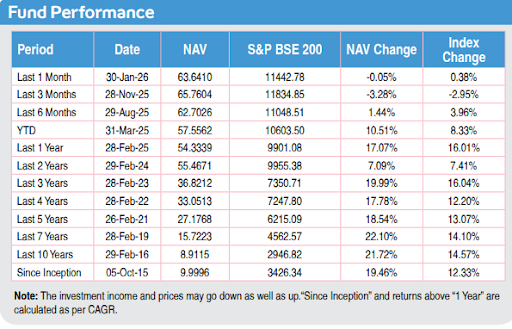
20ULIP policies issued on or after 1st February 2021 if the amount of aggregate annual premium payable in the financial year for all such policies does not exceeds INR 2,50,000/-. Subject to fulfillment of conditions mentioned in 10(10D).
21Return of Purchase price means return of all premiums paid excluding any extra premium, any rider premium, taxes and other statutory levies, if applicable.
22Only available with cash bonus option. The current loyalty addition rate on the Sub-wallet will be 6.00% compounding monthly. The loyalty addition rate shall be at which RBI absorbs liquidity which currently is the Standing Deposit Facility (SDF) rate. The current Standing Deposit Facility rate is 6.00% p.a. and the same shall be reviewed bi-monthly. The Company may in future change the reference rate from Standing Deposit Facility rate to some other index.
Some benefits are guaranteed, and some benefits are variable with returns based on the future performance of your insurer carrying on life insurance business. If your policy offers guaranteed benefits, then these will be clearly marked “guaranteed’ in the illustration table on this page. If your policy offers variable benefits, then the illustrations on these pages will show two different rates of assumed future investment returns. Currently these are assumed rate of returns as 4% p.a. and 8% p.a. These assumed rates of return are not guaranteed, and these are not the upper or lower limits of what you might get back, as the value of your policy is dependent on a number of factors including actual future investment performance.
Linked Life Insurance products are different from traditional insurance products and are subject to risk factors.
Various funds offered under this contract are the names of the funds and do not in any way indicate the quality of these plans, their future prospects and returns. The premium paid in Linked Life Insurance policies is subject to investment risks associated with capital markets and publicly available index. The NAV of the units may go up or down based on the performance of Fund and factors influencing the capital market/publicly available index and the insured is responsible for his/her decisions. On survival to the end of the policy term, the Total Fund Value including Top-Up Premium Fund Value valued at applicable NAV on the date of Maturity will be paid
Investments are subject to market risks. The Company does not guarantee any assured returns. The investment income and price may go down as well as up depending on several factors influencing the market
Please know the associated risks and the applicable charges, from your insurance agent or the Intermediary or policy document issued by the insurance company. Please make your own independent decision after consulting your financial or another professional advisor
Past performance is not indicative of future performance. Returns are calculated on an absolute basis for a period of less than (or equal to) a year, with reinvestment of dividends (if any)
If your policy offers variable benefits, then the illustrations on this page will show two different rates of assumed future investment returns. Currently the gross investment returns are stipulated as 4% p.a. and 8% p.a. These assumed rates of return are not guaranteed, and these are not the upper or lower limits of what you might get back, as the value of your policy is dependent on a number of factors including actual future investment performance.
Life insurance cover is available under the solution. For more details on risk factors, terms and conditions please read Sales Brochure carefully before concluding a sale.
Risk cover commences along with policy commencement for all lives, including minor lives. Buying a Life Insurance Policy is a long-term commitment. An early termination of the Policy usually involves high costs, and the Surrender Value payable may be less than the all the Premiums Paid. In case of non-standard lives and on submission of non-standard age proof, extra premiums will be charged as per our underwriting guidelines. All Premiums and interest payable under the policy are exclusive of applicable taxes, duties, surcharge, cesses, or levies which will be entirely borne/ paid by the Policyholder, in addition to the payment of such Premium or interest. Tata AIA Life shall have the right to claim, deduct, adjust, and recover the amount of any applicable tax or imposition, levied by any statutory or administrative body, from the benefits payable under the Policy.
The risk factors of the bonuses projected under the product are not guaranteed.
Past performance doesn't construe any indication of future bonuses, and these products are subject to the overall performance of the insurer in terms of investments, management of expenses, mortality and lapses.
L&C/Advt/2026/May/3191
New user? Our experts are happy to help.
Thank you for sharing your details.
Our representative will contact you soon.




 Get ₹ 1 Cr Life Cover at ₹ 502/month11