







Need assistance in choosing the right insurance plan?

Need assistance in choosing the right insurance plan?Get a call from our Expert.

Are you an NRI?

Yes
No

+91 dropdown arrow

Select Plan dropdown arrow
  • Term plans
  • Saving plans
  • Wealth plans
  • Retirement plans
  • I don't know/I need help

Section 44ADA provides a presumptive taxation scheme for professionals like doctors, engineers, lawyers, etc. According to this, they can pay a flat rate of 8% on 50% of their gross receipts without deductions as an alternative to normal tax computation.

As a professional, completing your income tax returns can feel overwhelming. It’s a lengthy and intricate procedure if you don’t know much about tax legislation and rules. Section 44ADA of the Income Tax Act makes filing tax returns easier for professionals.

In this blog, we will discuss Section 44ADA and its advantages for Indian professionals.

What is Section 44ADA of The Income Tax Act?

Section 44ADA of the Income Tax Act provides presumptive taxation for certain professionals. It allows eligible individuals to pay 50% of their gross income tax. Only those with a professional income under section 44ADA less than ₹50 lakhs and those engaged in specified occupations can opt for this scheme. It aims to simplify tax compliance for self-employed individuals while reducing their tax liability.

Objectives

The major objectives of Section 44ADA of the Income Tax Act are:

  • Simplification of the tax system for self-employed professionals. This section allows them to pay tax presumptively at a fixed percentage of gross receipts.
  • Minimisation of the tax burden on self-employed individuals. Paying tax on 50% of gross receipts reduces the taxable income for many professionals.
  • Facilitation of streamlined business processes. Presumptive taxation relieves professionals from maintaining accounts books. Additionally, sec 44ADA of the Income Tax Act reduces the account audit under normal provisions.
  • Parity establishment among businesses under Section 44ADA of the Income Tax Act. The act also helps manage all eligible professionals in a standardised and simple manner.

Eligibility Criteria for Section 44ADA of the Income Tax Act

To be eligible for this scheme, you must:

  • Earn less than ₹50 lakhs a year from your profession.
  • Fill out Form ITR-4 to submit your income tax return.
  • Must be a professional in any of these fields:

Did you know?

Section 44ADA provides several important benefits to eligible professionals and freelancers in India. It allows for a simple and hassle-free tax filing process. With no need to maintain accounting books under Section 44AA, it saves time and effort for small businesses.

Budget 2023 Update

The government has revised the presumptive taxation limits under Section 44AD and Section 44ADA of the Income Tax Act for the financial year 2023-24 (the assessment year 2024-25) as follows:

Category Previous limit Revised limit
Sec 44AD: For small businesses ₹2 crores ₹3 crores
Sec 44ADA: For professionals like doctors, lawyers, engineers, etc. ₹50 lakhs ₹75 lakhs

Benefits of Section 44ADA of the Income Tax Act

Section 44ADA provides several important benefits to eligible professionals and freelancers in India. It allows for a simple and hassle-free tax filing process. With no need to maintain accounting books under Section 44AA, it saves time and effort for small businesses.

This section reduces the tax liability by deeming 50% of gross receipts as profit. It lowers the tax outgo for those with low net incomes. Furthermore, it encourages compliance by making the tax system less complex.

With a simplified mechanism, Section 44ADA facilitates the smooth running of self-employment activities. The uniform application of presumptive taxation also ensures parity among eligible professionals.

These benefits maximise cash flow and savings for sole proprietorships and small businesses. A lighter compliance burden frees up resources for business growth. Lastly, Section 44ADA also aids tax planning and management.

Calculation of 44AD Presumptive Income under Section 44ADA

Mr X is an independent interior designer. For the financial year 2022-23, his collections are ₹40 lakh. He spends an estimated amount of ₹10 lakh annually on rent, transport, utility, and travelling.

Here, we can compare his taxable income under normal provisions and the presumptive scheme as below:

1. Under Normal Provision

  • Gross Receipts: ₹40,00,000
  • Less: Expenses ₹10,00,000
  • Net Profit: ₹30,00,000

2. Under Presumptive Scheme

  • Gross Receipts: ₹40,00,000
  • Less: 50% deemed as expenses, leaving ₹20,00,000
  • Net Profit: ₹20,00,000

Things to Remember regarding Section 44ADA

Some important things to remember regarding Section 44ADA are as follows:

  1. Contact Your Bank Immediately: Report the unauthorised charge and prevent further withdrawals.
  2. Provide Transaction Details: Give your bank details about the unauthorised transaction and how your account information was obtained.
  3. Follow Up with Your Bank: Ensure the issue is resolved and your funds are restored.

How does a term life insurance policy work?

The working of a Term Life insurance policy includes two basic steps. The first being policyholders paying regular premiums and the second being the beneficiaries receiving the assured sum as financial protection in case of the policyholder’s unfortunate demise during the term. Let us understand them in detail.

  1. Individual chooses a policy Individual reviews the policy, fills out the application, selects the coverage period, sum assured and undergoes medical tests, as required by the insurer.
  2. Insurer decides the premium Insurer evaluates the policyholder’s risk based on age, health, lifestyle and habits like smoking and determines the premium amount.
  3. Premium payment starts Once the policy is approved, the policyholder needs to pay the premiums - monthly, quarterly, half-yearly or annually, as per their convenience. The policy remains active as long as the premiums are paid.
  4. Coverage period begins From day one of the policy term, you’re covered. If you pass away during this period, the insurer pays the full sum assured to your nominee, as per the policy.
  5. Get back premium on policy survival You can opt for a term plan with return of premium2 to get back all your premiums paid if you outlive the policy term.

How to buy a term insurance policy?

After understanding what is term insurance, let’s go through the steps to buy it:

Step 1: Understand the policy

A term life insurance policy is an agreement between you and the insurance company wherein you pay a fixed amount, called premium, for a fixed period of time. The person to be covered under the policy is called 'life assured'. If the 'life assured' dies within that duration, the insurer pays money to the nominee.

Step 2: Fill the proposal form

You will need to provide the necessary personal and financial information while applying, which includes:

  • Medical history and current health status
  • Lifestyle habits (smoking, alcohol consumption, etc.)
  • Age and income
  • Profession

These details will help an insurer assess the risk and calculate your premium. Factors that can increase your premium include older age, smoking, high-risk hobbies, or chronic illness. A medical test may also be conducted if deemed necessary by the insurer. It may be tele-medical, video medical, or physical medicals.

Step 3: Decide policy details

You have to make a few key decisions before buying the policy:

  • Life cover amount: The sum assured must be sufficient to cover the various expenses, debt repayment, and other future obligations of your family.
  • Policy term: Choose for how long you want the coverage, such as until your children are financially independent or until your retirement.
  • Premium payment mode: You can pay once, regularly over the term, or over a limited period.
  • Payout option: You could then opt for a one-time payout or staged payments, whichever works for your family.
  • Add-on riders4: At a small extra cost, you can add benefits in the form of accidental death or critical illness cover.

Step 4: Reviewing the premium quote

Once you fill out the form, the insurer will assess your details and give a premium quotation. If you agree and make the payment, your policy is considered activated.

Step 5: Manage changing needs

Certain term plans allow increasing cover over time. For example, one may be able to add more cover after marriage or the birth of a child or with an increase in financial responsibilities. This helps your policy keep pace with inflation and life changes.

Conclusion

Automatic withdrawal scams can be financially devastating, but staying informed and vigilant can help protect you. By understanding how these scams work, taking proactive steps to safeguard your account information, and knowing what to do if you become a victim, you can reduce your risk and keep your money safe. Remember, if something seems too good to be true, it probably is. Stay cautious and protect your financial well-being.

Term Insurance plans from Tata AIA

Tata AIA Life Insurance has an Individual Death Claim Settlement Ratio (CSR) of 99.14% for the financial year 2024-25. This reflects the company’s commitment to timely claim settlements when your family needs it most.

Tata AIA offers the following term plans:

1. Tata AIA Maha Raksha Supreme

  • Includes an accelerated payout benefit that provides 50% of the base life cover in case of terminal illness.
  • Allows you to increase coverage as your insurance needs change, without requiring new medical tests.
  • Life cover starts from ₹2 Crore

Tata AIA Maha Raksha Supreme Select - Non-Linked, Non-Participating, Pure Risk, Individual Life Insurance Product (UIN: 110N171V12)

2. Tata AIA Sampoorna Raksha Promise

  • Offers financial protection for your family with flexible premium payment options.
  • Policyholders can choose to receive their death benefit as a lump sum or in instalments
  • Life cover starts from ₹50 Lakh

Tata AIA Sampoorna Raksha Promise - Non-Linked, Non-Participating, Pure Risk, Individual Life Insurance Product (UIN:110N176V07)

3. Tata AIA Saral Jeevan Bima

  • Get comprehensive cover for your family
  • Tax3 benefits on premiums paid

The complete name of Tata AIA Saral Jeevan Bima is Tata AIA Life Insurance Saral Jeevan Bima - A Non-Linked Non-Participating Individual Pure Risk Premium Life Insurance Plan (UIN: 110N157V02)

4. Tata AIA Bharat Suraksha Cover Micro Insurance

  • Simple and affordable protection plan
  • Flexibility to choose your Policy Term and Premium Payment Term

Tata AIA Bharat Suraksha Cover Micro Insurance Plan - Non-linked, Non-Participating Individual Micro Term Insurance Plan (UIN: 110N169V01)

Term Insurance plans from Tata AIA

Tata AIA Life Insurance has an Individual Death Claim Settlement Ratio (CSR) of 99.14% for the financial year 2024-25. This reflects the company’s commitment to timely claim settlements when your family needs it most.

Aspect Financial year Assessment year
Definition 12-month period during which income is earned, and financial transactions occur 12-month period during which the previous year's income is assessed and taxed
Purpose Earning income, making investments, and incurring expenses Filing ITR, paying taxes, claiming deductions, and tax assessment
Timeline Comes first in the sequence Immediately follows the Financial year
Example FY 2024-25: April 1, 2024 – March 31, 2025 For the same time period, Assessment Year will be AY 2025-26
Activities Income generation, profit/loss recording, business operations Tax computation, return filing, refund claims, and audit completion
Relevance Base period for income documentation Period for tax compliance and assessment
HRA Exemption Claim - Blog Border Icon

Tata AIA Life Insurance

A joint venture between Tata Sons Pvt. Ltd. and AIA Group Ltd. (AIA),  Tata AIA Life Insurance  is one of the leading life insurance providers in India. We post everything you need to know about life insurance, tax savings and a variety of lateral topics such as savings and investments in this space. You can access and read a host of different blogs, articles and pages at the Tata AIA Life Insurance Knowledge Center or get in touch with us with any queries or questions!

View all posts by Tata AIA Life Insurance

Key Takeaways

  • Simplification of the tax system for self-employed professionals.
  • Tax liability by deeming 50% of gross receipts as profit
  • Section 44ADA also aids tax planning and management.

Need assistance in choosing the right insurance plan?

Are you an NRI?

Yes
No

+91 dropdown arrow

Looking to buy a new insurance plan?

Our experts are happy to help you!

Are you an NRI?

Yes
No

+91

Select plan
  • Term plans
  • Saving plans
  • Retirement plans
  • Wealth plans
  • I don't know/I need help

1.

What is the difference between a savings plan and an investment plan?

A savings plan focuses on secure, fixed returns, while an investment plan helps grow wealth through market-linked6 options offering higher potential returns and moderate risk.

2.

Should I opt for a short-term or long-term investment plan?

Choose short-term plans with lower risk for short-term goals and long-term plans to build wealth effectively through compounding and market growth over time.

3.

Do all investment plans offer tax benefits under Section 80C?

YAll investment options do not qualify for tax5 deductions. Only eligible plans such as ULIPs or specific life-linked investments allow Section 80C benefits, subject to premium limits.

4.

Do investment plans offer guaranteed returns?

Market-linked6 investment plans don’t guarantee returns, but some guaranteed-return* plans provide stable growth with lower risk, ideal for conservative investors seeking predictable outcomes.

5.

What is the lock-in period under ULIPs?

ULIPs come with a mandatory five-year lock-in period, during which withdrawals aren’t permitted. After this, partial withdrawals are allowed as per policy rules.

6.

How can I start investing in my early 20s?

You can start investing in your early 20s by choosing simple plans like PPF, SIP in ELSS, or ULIP to build long-term savings.

7.

How can I save money from my salary?

You can save funds from your salary by setting a fixed monthly budget and allocating funds to an investment plan each month.

8.

What are some good investment options in India?

Some good investment options in India include PPF, VPF, ELSS, ULIP, and NSC based on risk and time horizon.

9.

Which is right for me: a savings plan or an investment plan?

You should choose an investment plan if you want higher long-term growth, while savings plans may be suitable for short-term safety.

10.

Which plan is best for investment?

The reliable investment plan varies by your goals, risk tolerance, and time frame, such as PPF for safety or ELSS for growth.

11.

Which is the best monthly investment plan?

A monthly SIP in ELSS or ULIP can be a suitable monthly investment plan for disciplined investing and potential growth.

12.

What if I invest ₹5,000 per month?

If you invest ₹5,000 per month, you will build a substantial corpus over time, especially if you start early and stay consistent.

13.

How to invest ₹10,000 in India for high returns?

To invest ₹10,000 in India for high returns, you can choose ELSS or ULIP depending on your risk appetite and investment horizon.

14.

Which investment gives the highest return?

Historically, equity-linked options like ELSS or certain ULIPs have offered potential returns but comes with a higher risk.

15.

Which plan is better than FD?

Investment plans such as ELSS, ULIPs, or PPF are generally better than FD for long-term returns.

16.

Are long-term investment plans more profitable than short-term ones?

Yes, long-term investment plans tend to be more profitable due to compounding and higher earning potential.

17.

What is the 72 rule in investing?

The 72 rule says you can double your fund by dividing 72 by the interest rate to estimate how many years it takes.

18.

What is the 15 * 15 * 30 rule?

The 15*15*30 rule suggests investing time or money: 15% of income, 15 years, to double your funds.

19.

Which investment options can help double your returns in 5 years?

Equity schemes like ELSS or market-based ULIPs can help double your returns in 5 years, though risk is involved.

20.

How do you withdraw from investments?

You can withdraw from investments by completing the lock‑in period, requesting redemption, and transferring funds to your bank.


  • The linked insurance product do not offer any liquidity during the first five years of the contract. The policy holder will not be able to surrender/withdraw the monies invested in linked insurance products completely or partially till the end of the fifth year.
  • Param Raksha Life Pro + is designed for combination of benefits of following individual and separate products named (1) Tata AIA Smart Sampoorna Raksha Supreme Unit Linked, Non-Participating Individual Life Insurance Plan (UIN: 110L179V02) and (2) Tata AIA Vitality Protect Advance - A Non-Linked, Non- Participating Individual Health Product 
(UIN: 110N178V01).
  • These products are also available for sale individually without the combination offered/ suggested. This benefit illustration is the arithmetic combination and chronological listing of combined benefits of individual products. The customer is advised to refer the detailed sales brochure of respective individual products mentioned herein before concluding sale.
  • Tata AIA Premier SIP is a combination of the Tata AIA Smart SIP, a non-participating, unit-linked, individual life insurance savings plan (UIN: 110L174V01), and Tata AIA Vitality Protect Advance, an individual, non-linked, non-participating health insurance plan (UIN: 110N178V01)
  • 1Tax benefits of up to ₹46,800 u/s 80C is calculated at highest tax slab rate of 31.20% (including cess excluding surcharge) on life insurance premium paid of ₹1,50,000 as per old tax regime. Tax benefits under the policy are subject to conditions laid under Section 80C, 80D,10(10D), 115BAC and other applicable provisions of the Income Tax Act,1961. Good and Service tax and Cess, if any will be charged extra as per prevailing rates. The Tax-Free income is subject to conditions specified under section 10(10D) and other applicable provisions of the Income Tax Act,1961. Tax laws are subject to amendments made thereto from time to time. Please consult your tax advisor for details, before acting on above.
  • 2Market-linked returns are subject to market risks and terms & conditions of the product. The assumed rate of returns or illustrated amount may not be guaranteed and depends on market fluctuations.
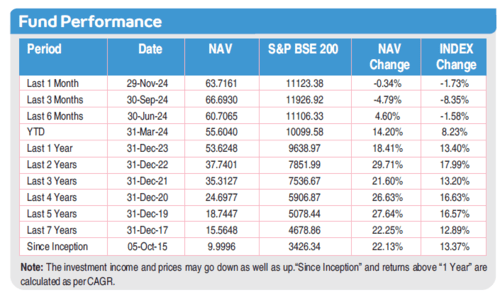
  • 35-year computed NAV for Multi Cap Fund as of Mar 2025. Other funds are also available. Benchmark of this fund is S&P BSE 200.
  • ©2024 Morningstar. All rights reserved. The Morningstar name is a registered trademark of Morningstar, Inc. in India and other jurisdictions. The information contained here: (1) includes the proprietary information of Morningstar, Inc. and its affiliates, including, without limitation, Morningstar India Private Limited (“Morningstar”); (2) may not be copied, redistributed or used, by any means, in whole or in part, without the prior, written consent of Morningstar; (3) is not warranted to be complete, accurate or timely; and (4) may be drawn from data published on various dates and procured from various sources and (5) shall not be construed as an offer to buy or sell any security or other investment vehicle. Neither Morningstar, Inc. nor any of its affiliates (including, without limitation, Morningstar) nor any of their officers, directors, employees, associates or agents shall be responsible or liable for any trading decisions, damages or other losses resulting directly or indirectly from the information. 
  • 4All funds open for new business which have completed 5 years since inception are rated 4 star or 5 star by Morningstar as of December 2024
  • 5Income Tax benefits would be available as per the prevailing income tax laws, subject to fulfillment of conditions stipulated therein. For ULIP policies, maturity income will be taxable if annual aggregate premium exceeds ₹2.5 Lakh in a financial year. Tax laws are subject to change from time to time. Tata AIA Life Insurance Company Ltd. does not assume responsibility on tax implications mentioned anywhere on this site. Please consult your own tax consultant to know the tax benefits available to you.
  • This product is underwritten by Tata AIA Life Insurance Company Ltd. 
  • Tata AIA Life Insurance Company Limited is only the name of the Insurance Company & Tata AIA Smart Sampoorna Raksha Supreme, Tata AIA Smart SIP are only the names of the Unit Linked Life Insurance contract and does not in any way indicate the quality of the contract, its future prospects or returns
  • The fund is managed by Tata AIA Life Insurance Company Ltd.
  • The plans are not a guaranteed issuance plan, and it will be subject to Company’s underwriting and acceptance.
  • The Company does not guarantee any assured returns. The investment income and price may go down as well as up depending on several factors influencing the market.
  • Insurance cover is available under this product.
  • The linked insurance product do not offer any liquidity during the first five years of the contract. The policy holder will not be able to surrender/withdraw the monies invested in linked insurance products completely or partially till the end of the fifth year.
  • For more details on risk factors, terms and conditions please read Sales Brochure carefully before concluding a sale. The precise terms and condition of this plan are specified in the Policy Contract.
  • Past performance is not indicative of future performance. Returns are calculated on an absolute basis for a period of less than (or equal to) a year, with reinvestment of dividends (if any).
  • Investments are subject to market risks. The Company does not guarantee any assured returns. The investment income and price may go down as well as up depending on several factors influencing the market. Please make your own independent decision after consulting your financial or other professional advisor
  • Unit Linked Life Insurance products are different from the traditional insurance products and are subject to the risk factors. Please know the associated risks and the applicable charges, from your Insurance Agent or Intermediary or Policy Document issued by the Insurance Company.
  • Various funds offered under this contract are the names of the funds and do not in any way indicate the quality of these plans, their future prospects and returns. The underlying Fund's NAV will be affected by interest rates and the performance of the underlying stocks.
  • The precise terms and condition of this plan are specified in the Policy Contract.
  • The performance of the managed portfolios and funds is not guaranteed, and the value may increase or decrease in accordance with the future experience of the managed portfolios and funds.
  • Premium paid in the Unit Linked Life Insurance Policies are subject to investment risks associated with capital markets and the NAVs of the units may go up or down based on the performance of fund and factors influencing the capital market and the Insured is responsible for his/her decisions.
  • Buying a life insurance policy is a long-term commitment. An early termination of the policy usually involves high costs and the Surrender Value payable may be less than the total premiums paid.
  • L&C/Advt/2025/Sep/3559